Thermal Paper: The Backbone of Modern Billing and Receipt Solutions
Thermal paper is a specialized paper that changes color when exposed to heat, enabling printing without the need for ink or ribbons. Its invention revolutionized the billing and receipt industry by providing a faster, cleaner, and more efficient way to generate receipts at points of sale worldwide. Over recent decades, the global acceptance and widespread use of thermal paper have skyrocketed as businesses across retail, hospitality, banking, and logistics sectors adopted thermal printing technology.
This growth is fueled by the convenience thermal paper brings, from instant printing speeds to lower operational costs. With the booming e-commerce industry and increasing digital transactions, thermal paper continues to be the backbone of modern billing and receipt solutions, establishing itself as an essential consumable for retail and commercial enterprises globally.
Table of Contents
Types of Thermal Papers and Their Applications
Standard thermal paper for receipts and tickets
BPA-free paper for safer handling
Synthetic paper for durability and water resistance
Colored paper for branding and highlighting
Applications include POS receipts, ATM slips, lottery tickets, and shipping labels
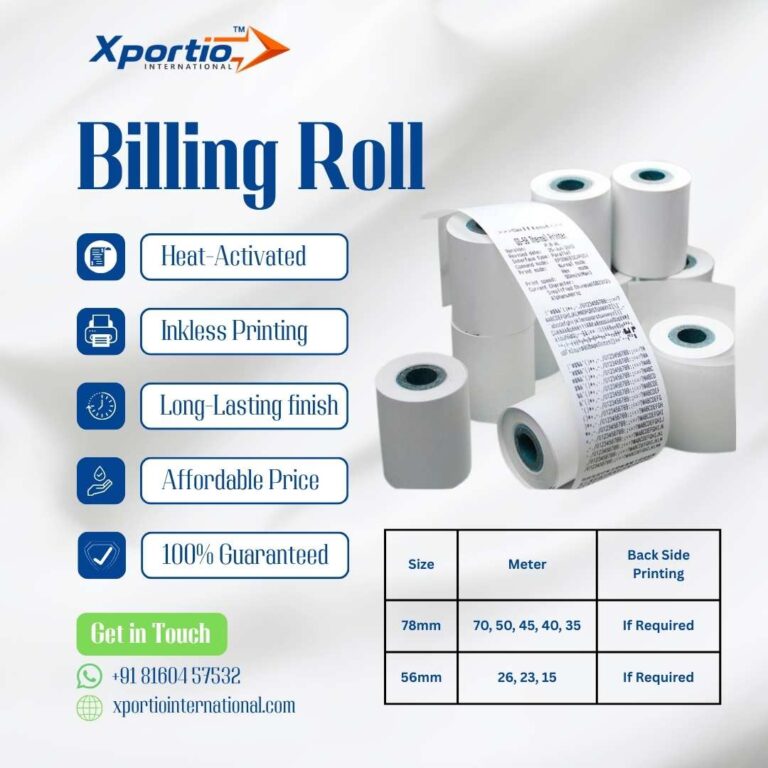
Why Traditional Billing Is Costlier Compared to Thermal Receipts
Traditional billing requires ink, toner, and frequent maintenance
Thermal receipts eliminate ink costs and reduce printer wear
Faster printing speeds increase transaction efficiency
Lower overall operational and consumable expenses
Why Big Brands Are Making the Shift
Superior print quality and faster receipt generation
Alignment with sustainability goals using BPA-free and recyclable papers
Enhanced customer satisfaction and operational efficiency
Large-scale adoption driven by brand image and cost benefits
How Thermal Printer Paper Offers Huge Margins to Global Importers and Retailers
Lightweight and compact, reducing shipping costs
High demand ensures steady sales and repeat orders
Low production cost compared to traditional paper
Attractive profit margins due to volume and frequent consumption
Various GSM of Thermal Paper & How to Calculate the Weight of a Roll
Common GSM range: 48 to 80 grams per square meter
GSM affects paper thickness, durability, and printing quality
Roll weight calculation depends on GSM, roll length, and core size
Helps in inventory management and shipping cost estimation
The Global Demand for Thermal Paper
Rapidly growing due to expanding retail, e-commerce, and digital payments
Major markets: Asia-Pacific, North America, Europe
China leads production and exports globally
Increasing regulatory push for eco-friendly BPA-free products
Introduction of Xportio International as a Manufacturer of Thermal Billing Rolls
Renowned manufacturer and exporter of high-quality thermal billing rolls
Focus on advanced technology and sustainable manufacturing
Customized solutions meeting global demand and diverse market needs
Strong customer service and reliable export capabilities